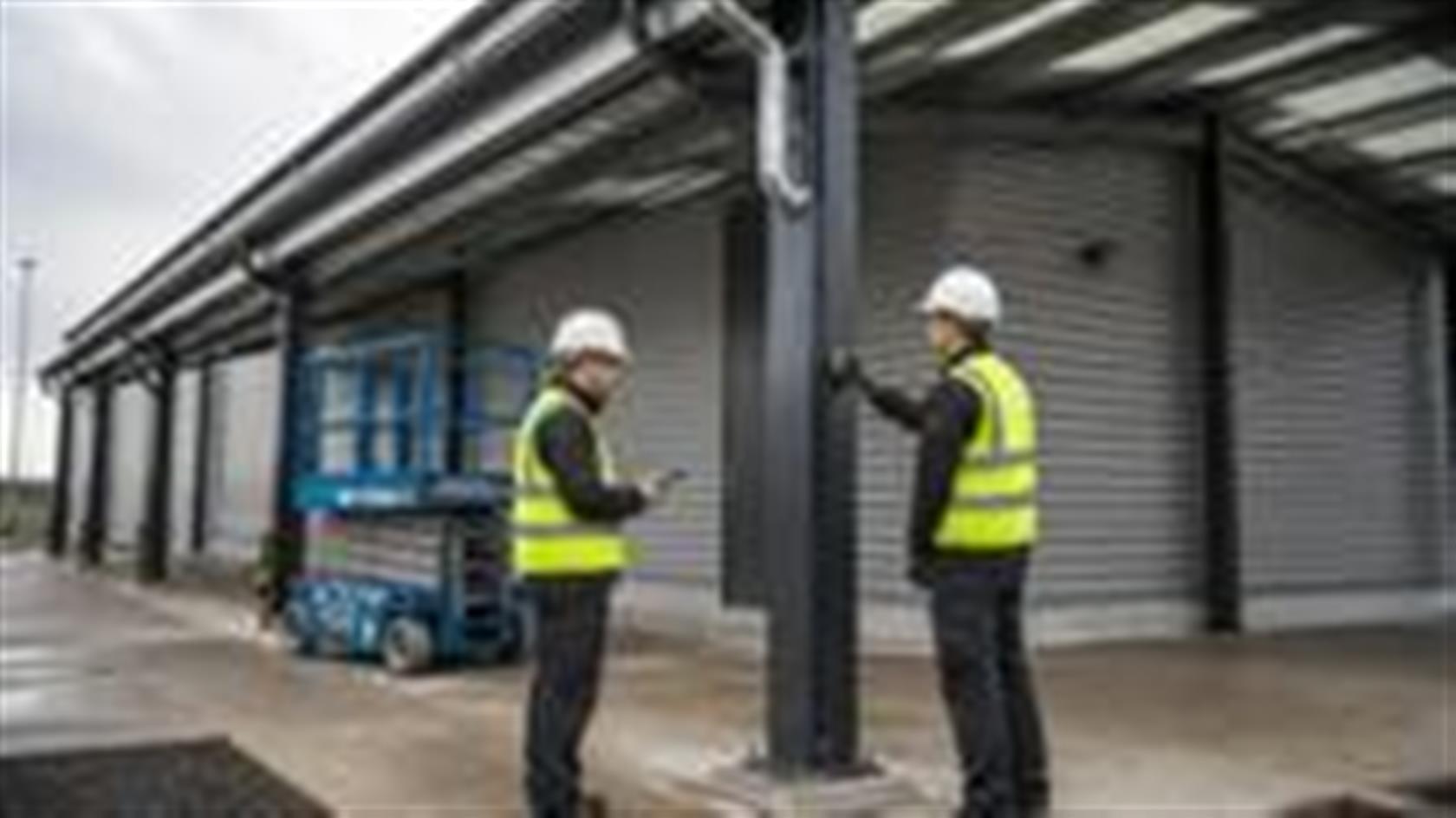
A well-designed steel building can serve for decades, but long service life depends on routine inspection and timely maintenance. A practical steel building maintenance checklist helps owners identify small problems—blocked gutters, loose fasteners, coating damage, water leaks, door misalignment, or settlement—before they become operational disruption or costly repairs.
This guide gives warehouse, workshop, and industrial-building owners a useful inspection framework. It does not replace a structural engineer, qualified roof contractor, fire-protection specialist, or local safety requirements. If an inspection reveals deformation, significant corrosion, cracking, movement, or damage after an extreme event, keep people clear and obtain professional assessment before repairs begin.
Steel Building Maintenance Checklist: The Core Principle
Inspect the complete water and load path, not only visible steel. The most important maintenance relationship is simple:
- Keep water out of the building envelope.
- Move water safely off the roof and away from foundations.
- Protect coatings and repair exposed steel promptly.
- Keep structural connections, doors, equipment supports, and safety systems in their intended condition.
- Record findings and use qualified professionals for structural repairs.
Many corrosion problems in enclosed steel buildings start when a roof, wall, gutter, flashing, or service penetration allows repeated moisture entry. Good maintenance is therefore both envelope care and structural asset management.
Set an Inspection Frequency
A common maintenance program combines frequent visual checks with more detailed periodic inspections. The exact schedule should reflect the building’s location, weather, industrial exposure, roof access, operating hours, and manufacturer warranty requirements.
- Monthly or routine walk-through: check doors, gutters visible from ground level, leaks, drainage, vehicle damage, and housekeeping.
- After severe weather: inspect for wind damage, ponding, loose panels, blocked drains, impact damage, and unusual movement.
- Twice yearly: inspect roof edges, gutters, downpipes, flashing, wall panels, sealants, fasteners, and exterior coatings.
- Annually: review the building envelope, structural components accessible for inspection, fire-protection systems, doors, loading equipment, foundations, and maintenance records.
- As required: commission qualified specialists for fire systems, electrical equipment, cranes, roof safety systems, lifts, or regulated machinery.
Buildings near the coast, in high-humidity climates, or exposed to chemicals, heavy dust, or frequent storms may need more frequent inspection. A fixed calendar is useful, but an event-driven inspection after unusual wind, snow, flood, impact, or fire is equally important.
1. Roof and Drainage Inspection
The roof is the first line of protection. Inspect only from safe, approved access; do not walk on a roof unless it is designed for access and the correct fall-protection measures are in place.
Check for:
- Standing water, staining, clogged drains, or repeated overflow;
- Loose, damaged, or corroded roof panels, fasteners, flashings, and ridge caps;
- Open laps, failed sealants, damaged closures, or penetrations around pipes and equipment;
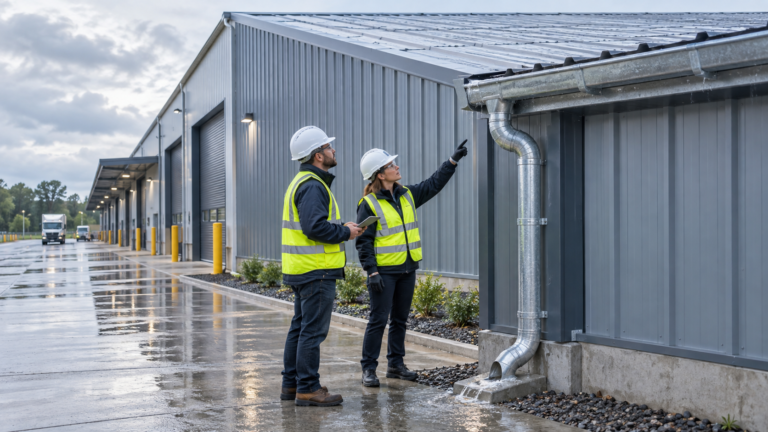
- Gutters that sag, leak, overflow, or contain leaves and debris;
- Downpipes that are loose, blocked, crushed, or discharging beside foundations;
- Damage caused by rooftop equipment, unauthorized access, or falling debris.
Do not simply apply sealant over an unexplained leak. Find the water path and repair the root detail using compatible materials. Repeated ponding may indicate a blocked outlet, inadequate drainage, roof deflection, or settlement and should be reviewed by the appropriate professional.
For drainage details, see our steel building roof drainage guide. It explains the relationship among roof slope, gutters, downpipes, emergency overflow, and site discharge.
2. Wall Panels, Windows, and Doors
Wall cladding protects insulation, internal finishes, and structural steel from weather. Inspect panels for dents, loose fasteners, open joints, corrosion, impact damage, and failed sealants. Pay special attention to wall bases, corners, roof-to-wall interfaces, windows, louvers, canopies, and service penetrations.
Operational doors deserve regular attention because they experience frequent movement and vehicle exposure. Check door tracks, rollers, springs, safety sensors, seals, hinges, locks, and panels. Keep tracks clean and do not bypass safety devices. Replace damaged weather seals before wind-driven rain and dust enter the building.
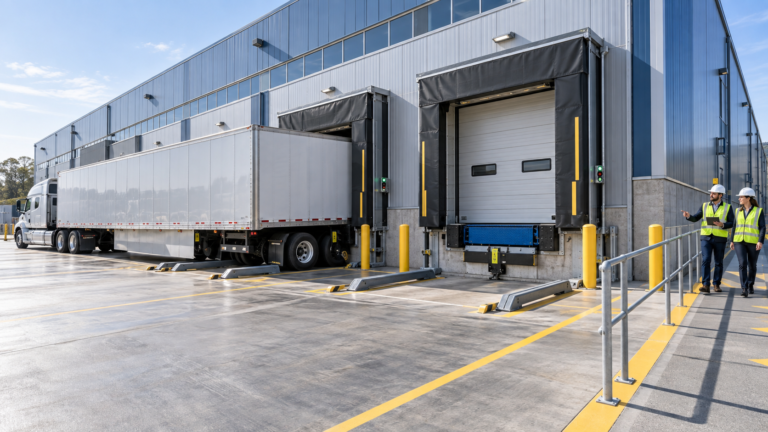
At loading docks, inspect bumpers, dock seals, leveler pits, vehicle restraints, controls, guardrails, bollards, and pavement markings. Vehicle impacts should be documented; even if a panel appears intact, a structural jamb, connection, or embedded component may require inspection.
3. Structural Steel and Connections
Most enclosed structural steel is well protected during normal service. However, look for evidence that environmental protection has failed: corrosion, peeling coating, water staining, rust runs, white deposits on galvanized components, or moisture trapped at joints.
Focus on vulnerable locations:
- Exterior canopies, exposed columns, stairways, mezzanines, and platform steel;
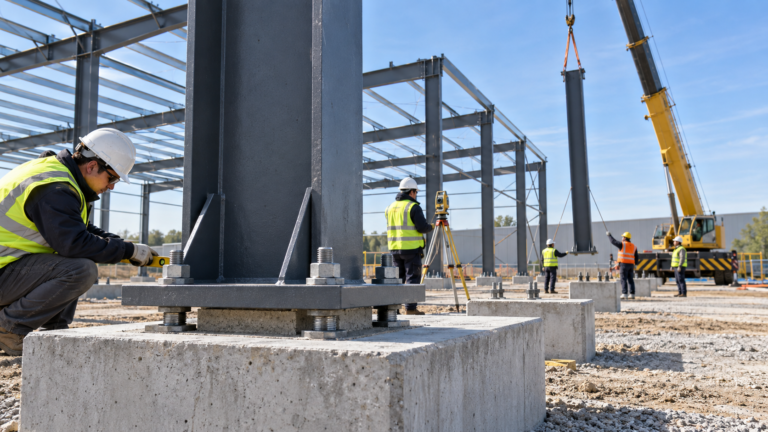
- Base plates, anchor rods, and steel close to grade or drainage discharge;
- Roof leaks, gutters, valleys, downpipes, and condensation-prone areas;
- Connections around equipment supports, cranes, and added services;
- Members exposed to chemical fumes, salt air, washdown, or process moisture;
- Areas damaged by forklifts, trucks, pallets, or stored materials.
The American Institute of Steel Construction notes that coatings can degrade with time and that envelope failures can allow unintended moisture intrusion. Its guidance on assessment and repair of existing steel buildings recommends proactive maintenance and condition assessment to identify deterioration before it affects performance.
Never straighten, drill, cut, weld, heat, or remove structural members, braces, bolts, or connections without engineering approval. Do not add suspended equipment, racks tied to columns, solar systems, or new MEP loads without confirming the original design capacity.
4. Coating and Corrosion Protection
Record the original coating system, color, manufacturer, and repair specification at handover. Small coating damage should be cleaned and repaired using compatible products before corrosion progresses beneath adjacent paint. Surface preparation matters: applying a finish coat over loose rust, contamination, or failed paint usually produces a short-lived repair.
For galvanized steel, inspect high-risk areas for accelerated corrosion, mechanical damage, and conditions that keep the surface wet. The American Galvanizers Association recommends periodic field inspection of erected galvanized steel and notes that coating thickness can help estimate time to first maintenance in atmospheric exposure. Its field inspection guidance is a useful reference for coating-condition checks.
Corrosion that involves material loss, repeated leakage, structural cracking, or a rapidly growing affected area should be referred to an engineer or coating specialist. A cosmetic touch-up may hide a condition that needs a deeper evaluation.
5. Foundations, Slabs, and Site Drainage
Inspect the building perimeter for water ponding, erosion, settlement, slab cracking, damaged joint sealant, or downpipes discharging next to pedestals. Keep landscaping, stored materials, soil, and debris from trapping moisture against wall panels or steel.
Look at base plates and anchor rods for corrosion, loose nuts, cracked grout, distorted plates, or movement. Do not tighten or alter anchor rods based solely on a visual judgment; report the condition for engineering review. Cracks in floor slabs can have many causes, so document location, width, direction, and whether they are changing.
Our steel building foundation design guide explains why soil, drainage, anchor rods, base plates, and concrete must work as one system.
6. Insulation, Ventilation, and Condensation
Condensation can look like a roof leak, but its cause may be internal humidity, poor insulation continuity, damaged vapor control, inadequate ventilation, or uninsulated cold surfaces. Note when and where moisture occurs: after rain, during cold mornings, near roof penetrations, or above process areas. This information helps distinguish water intrusion from condensation.
Inspect insulation for wet areas, compression, gaps, or damage. Check louvers, fans, ridge vents, and intake openings for blockage and correct operation. Review our guides to steel building insulation and steel building ventilation when planning corrective work.
7. Fire Safety and Building Services
Do not use structural steel, roof purlins, sprinkler piping, or fireproofed members as convenient support points for new equipment without approval. Fireproofing, sprinkler piping, alarm devices, emergency lights, exits, and fire doors must remain unobstructed and maintained by qualified parties.
After a leak, impact, renovation, or new service installation, verify that fire-stopping, rated partitions, and protected members were not damaged. Our steel building fire protection guide outlines the coordination between structural protection, suppression, compartments, and inspection.
8. Keep Useful Maintenance Records
A maintenance log turns inspections into a management system. For each finding, record date, location, photos, observed condition, probable cause, temporary controls, responsible party, repair method, and closure date. Keep as-built drawings, warranties, paint data, roof documents, inspection reports, and equipment manuals in one accessible location.
Trend information is valuable. A single small leak may be easy to repair; the same leak recurring every rainy season may show that the underlying drainage or interface was not corrected. Records also support insurance claims, warranty discussions, acquisition due diligence, and future expansion decisions.
Annual Steel Building Maintenance Checklist
- Clean gutters, drains, scuppers, and downpipe outlets.
- Inspect roof panels, flashings, fasteners, sealants, and penetrations.
- Check wall panels, windows, doors, louvers, and weather seals.
- Review exposed steel, coatings, galvanizing, base plates, and connections.
- Look for corrosion, impact damage, deformation, water staining, and loose components.
- Inspect exterior grades, site drainage, pavement, slab joints, and perimeter sealing.
- Test doors, loading-dock equipment, safety barriers, and traffic-protection devices.
- Confirm that new equipment or services have not overloaded or modified steel framing.
- Review fire systems, emergency exits, lighting, and required specialist inspections.
- Update maintenance records, photos, repair priorities, and budget needs.
When to Call an Engineer
Seek qualified engineering advice if you find visible member bending, buckling, cracking, separated connections, damaged bracing, significant material loss from corrosion, foundation movement, persistent ponding, a vehicle collision, fire exposure, or an unapproved structural modification. Restrict access if there is a potential safety concern.
Do not assume a repair is minor because it is low on the building or hidden behind cladding. The cause may be related to water, loads, movement, or a connection detail that needs investigation.
Frequently Asked Questions
How often should a steel building be inspected?
Routine visual checks, twice-yearly envelope inspections, annual comprehensive review, and inspections after significant weather or impact events provide a practical starting point. Adjust the schedule to the building’s environment and warranty requirements.
Can I paint over rust on structural steel?
Not as a lasting repair. The affected surface should be assessed, prepared to the approved standard, and recoated with a compatible system. If there is significant section loss or structural involvement, obtain engineering advice first.
Are small roof leaks urgent?
Yes. Small leaks can wet insulation, cause corrosion, damage inventory, and spread through concealed interfaces. Investigate and correct the source promptly.
Can warehouse tenants install new equipment on the steel frame?
Only after the responsible engineer confirms the frame and connections can safely carry the added loads. This includes suspended services, solar equipment, mezzanines, racks tied to columns, and process equipment.
Maintain the Envelope, Protect the Structure
A disciplined steel building maintenance checklist is one of the simplest ways to protect a warehouse investment. Keep water moving, repair coating damage early, control impacts, preserve safe loading and fire systems, and involve qualified professionals whenever a condition could affect structural performance. Yuhui Steel can help owners review building-envelope and structural-steel information when planning maintenance, repair, or expansion work.